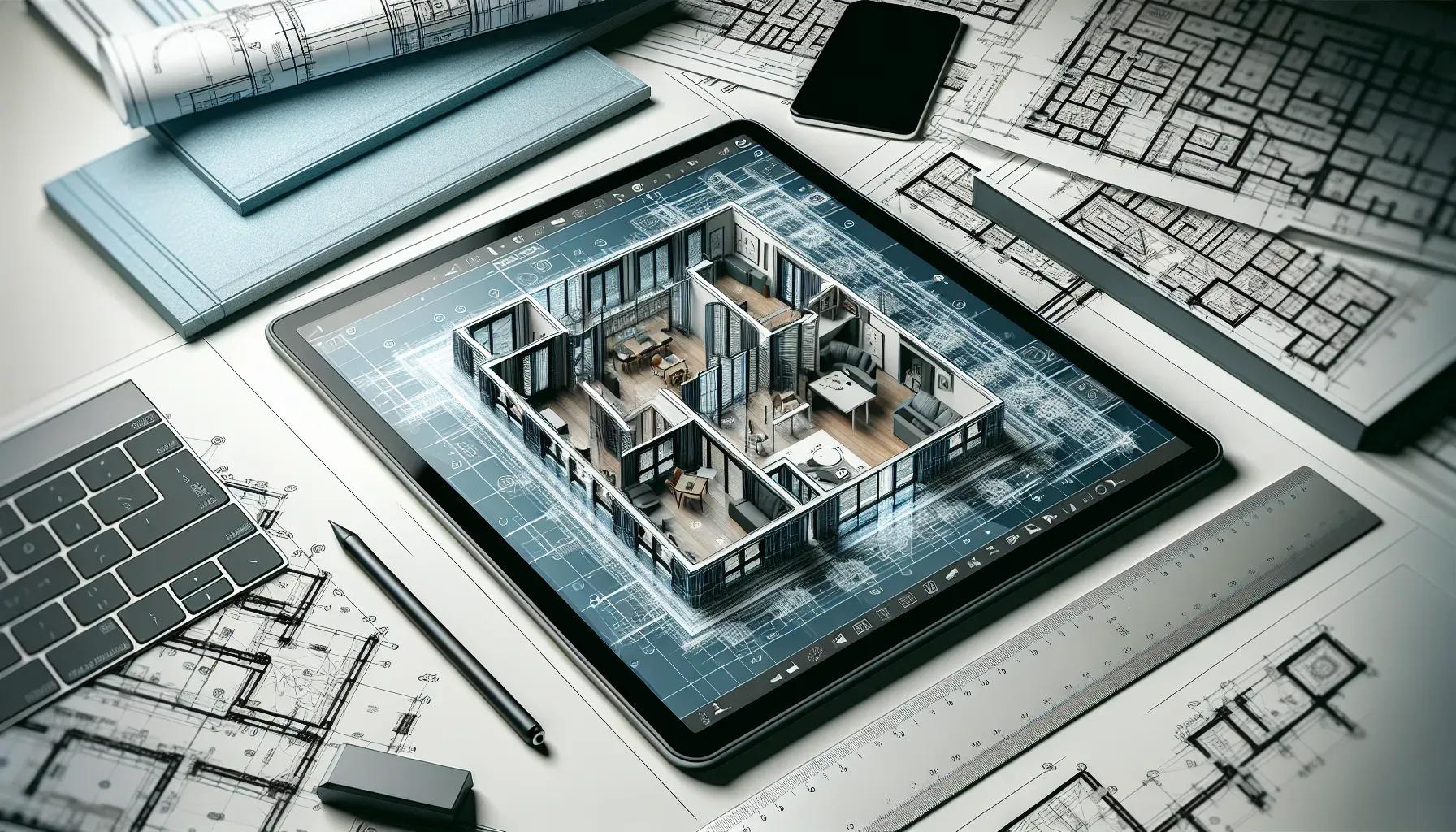

Welcome to a comprehensive exploration of the advancements in Building Information Modeling (BIM). In this blog post, we will delve into the latest developments, their impact on the industry, and the potential future of BIM. This technology has revolutionized the construction industry, and it continues to evolve, offering even more exciting possibilities.
Understanding BIM
Building Information Modeling, or BIM, is a digital representation of physical and functional characteristics of a facility. It serves as a shared knowledge resource for information about a facility, forming a reliable basis for decisions during its life-cycle from inception onward.
BIM is not just a fancy 3D model of a building. It's a process for creating and managing all the information on a project. The output of this process is the Building Information Model. The BIM is a digital description of every aspect of the built asset. It draws on information assembled collaboratively and updated at key stages of a project.
The use of BIM goes beyond the planning and design phase of the project. It extends throughout the building life cycle, supporting processes including cost management, construction management, project management, and facility operation.
The Evolution of BIM
The concept of BIM has been in existence since the 1970s. The term 'Building Information Model' first appeared in a 1992 paper by G.A. van Nederveen and F. P. Tolman. However, the terms 'Building Information Model' and 'Building Information Modeling' (including the acronym 'BIM') did not become popularly used until some 10 years later.
Since then, BIM has seen a rapid evolution. From its initial stages as a novel idea in the construction industry, it has grown into a vital tool for architects, engineers, and construction professionals worldwide.
BIM has evolved from being a 3D model used for visualization to a multi-dimensional tool. It now encompasses different dimensions such as 4D (time), 5D (cost), and even 6D (as-built operations) and 7D (sustainability).
Recent Advancements in BIM
The advancements in BIM technology have been significant in recent years. One of the most notable is the integration of BIM with cloud computing. This allows for real-time collaboration among all stakeholders in a project, regardless of their location.
Another significant advancement is the integration of BIM with virtual reality (VR) and augmented reality (AR). This allows stakeholders to visualize and interact with the building model in a more immersive way, leading to better design decisions.
The use of machine learning and artificial intelligence in BIM is another exciting development. These technologies can automate routine tasks, analyze data more efficiently, and predict outcomes, thereby improving the overall efficiency of the construction process.